SAVE THE BEES WNY
  • Home
  • Pollinators
  • Trees & Plants
  • Contact

Trees & Plants

Trees are vital. As the biggest plants on the planet, they give us oxygen, store carbon, stabilize the soil and give life to the world’s wildlife. They also provide us with the materials for tools and shelter. Not only are trees essential for life, they give us a link between the past, present and future. It’s critical that woodlands, rainforests and trees in urban and suburban settings, such as parks, are preserved and sustainably managed here and across the world.
Name Your Tree
Kenmore Tree Map

Caring For Your Trees

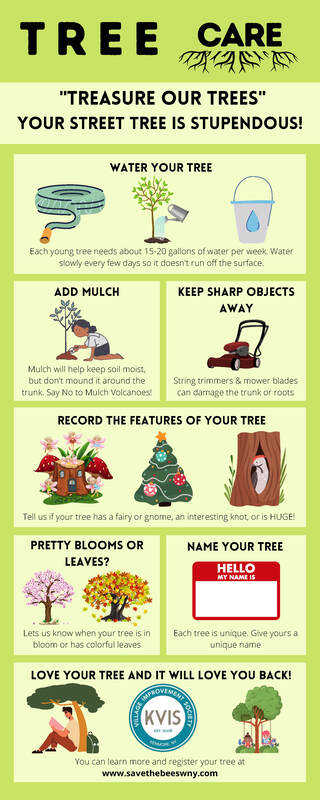
  • New trees planted in the past year or two need to be watered until they are established and can grow strong. Please water them every 3-5 days. Place a hose near the trunk of the tree and leave it on a slow trickle for an hour or two, especially during hot, dry spells. Make sure the water is not running off onto the pavement. You can also place a large trash can with a few holes drilled in the bottom next to the tree and fill the container. Water should slowly trickle out over an hour or two onto the tree roots. 
  • Never weed wack the base of a tree. It can cause cuts in the tree and prevent the tree from getting needed water and nutrients up to the leaves. Mowing the lawn very short over exposed tree roots can damage the tree as well. It is best to keep your lawn between 3 and 5 inches high and leave the clippings on the lawn to fertilize both the grass and tree. This will help prevent weeds from sprouting and you can use less herbicides and fertilizers. Protect the bees and trees and save money!​
  • Mulching around the tree can help hold moisture in the soil and eliminate the need to mow or trim near the tree, but keep the mulch an inch or two from the trunk to prevent rot.
  • Too much salt around plants and trees can hurt them. In the winter, make sure to shovel your driveway and sidewalk first and then #SaltSmart to keep gardens and trees happy.
  • Do you have a busy or elderly neighbor with a new tree? Ask if you can help your neighbor grow a strong tree! Each street tree in Kenmore helps our community as a whole.
  • If you have any questions on how to care for your tree, call your Town/Village Department of Public Works.  The Village of Kenmore DPW is (716) 875-0527.  

Don't know what kind of tree you have?

Ever wonder what type of tree is planted in front of your house or what kind of trees you see on a walk? Our friends at the Arbor Day Foundation have created a fun way to discover just that! Next time you look out your window at the tree planted in front of your house, see if you can figure out what type of tree it is and share that information with us when you make the pledge below. The name you choose is up to you as long as it’s respectful. We will then enter the name you choose for your tree on our tree map, so that everyone in Kenmore can get to know our trees.
Name Your Tree

Kenmore Tree Map

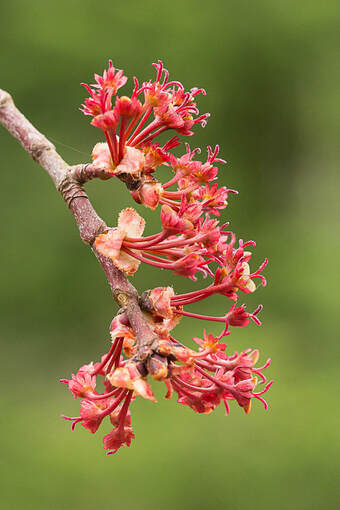
​Signs of Spring: Red Maple Flowers

Springtime celebrations would not be complete without some forest confetti! One of the first trees to bloom in springtime, the red maple has tiny, vibrant clusters of flowers that put on quite the show. Looking closely at their blooms, you can see pollen-bearing male flowers that look like fireworks and darker, Medusa-like female flowers. Once the male flowers have faded, they fall off and cover the ground like crimson confetti. If pollinated, the female flowers will develop into fruits called samaras, a.k.a. whirligigs or helicopters. 
Red maples are valued for more than just their flowers! These native trees also:
  • Provide food for pollinators and wildlife
  • Make good street or ornamental trees because they generally tolerate wet and dry conditions
  • Can be used to make maple syrup (though their sap has less sugar than sugar maples)
  • Have spectacular fall foliage
  • Are used for furniture, musical instruments, bowls, cutting boards, firewood, and pulpwood
Picture

    ​Name Your Tree/Tree Pledge

    I pledge to care for the avenue tree in front of my home or business or organization.  I have read the guidelines above and promise to do my best to make sure my tree is loved and cared for. 
    The first name submitted here will prevail, should there be more than one name entered by those living in doubles or two businesses sharing a tree.
Submit
Picture
Picture
treasure_our_trees_inforgraphic.pdf
File Size: 10114 kb
File Type: pdf
Download File

Why are trees so important?

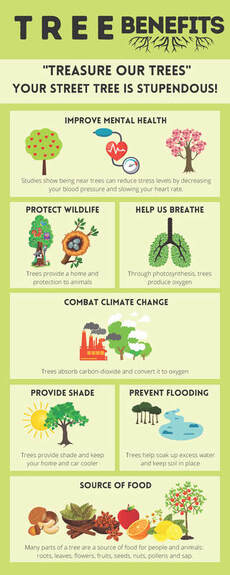
They improve our health.

The canopies of trees act as a physical filter, trapping dust and absorbing pollutants from the air. Each individual tree removes up to 3.75 lbs. every year. They also provide shade from solar radiation and reduce noise. There are many species of American trees and shrubs that are known to have medicinal properties. The oil from birch bark, for example, has antiseptic properties and a vinegar tonic can be made from apple and pine trees. Research shows that within minutes of being surrounded by trees and green space, your blood pressure drops, your heart rate slows and your stress levels come down.

They save the environment.

Trees absorb carbon dioxide as they grow and the carbon that they store in their wood helps slow the rate of global warming.  They reduce wind speeds and cool the air as they lose moisture and reflect heat upwards from their leaves. Trees also help prevent flooding and soil erosion, absorbing thousands of gallons of storm water.

They boost wildlife.

Trees host complex microhabitats. When the trees are young, they offer habitation and food to amazing communities of birds, insects, lichen and fungi. Older trees provide the hollow cover needed by species such as bats, woodboring beetles, tawny owls and woodpeckers. One mature oak can be home to as many as 500 different species. Many of our local Western New York parks are filled with various tree species and the wildlife they attract.

They strengthen communities.

Trees strengthen the distinctive character of a place, beautify it, and encourage local pride. Urban and suburban woodland can be used as an educational resource and to bring groups together for activities like walking and bird-watching. Trees are also invaluable for children to play in and discover their sense of adventure.

They grow the economy.

People are attracted to live, work and invest in green surroundings. Research shows that average house prices are 5-18% higher when properties are close to mature trees. Companies benefit from a healthier, happier workforce if there are parks and trees nearby.

They protect our future.

Soon, for the first time in history, the number of people with homes in cities will outstrip those living in the countryside. Parks and trees will become an even more vital component of urban and suburban life. We must respect and value trees while protecting them for the future.

Identify Your Tree

We will soon have a list of the type of trees planted in Kenmore and where they are located.  But until then, you can find out what type of tree you have by going to this helpful site provided by our friends at The Arbor Day Foundation.  
Make a Pollinator Garden!
Picture
Picture

​Save the Bees WNY is made possible by volunteers from the Kenmore Village Improvement Society (KVIS), and Erie County Legislator, Michael Kooshoian.   Funding is also provided by the Office of the New York State Attorney General and the New York State Department of Environmental Conservation through the Tonawanda Community Environmental Benefits program.


Learn More About KVIS
Photos from judy dean GonzoLinzo
  • Home
  • Pollinators
  • Trees & Plants
  • Contact